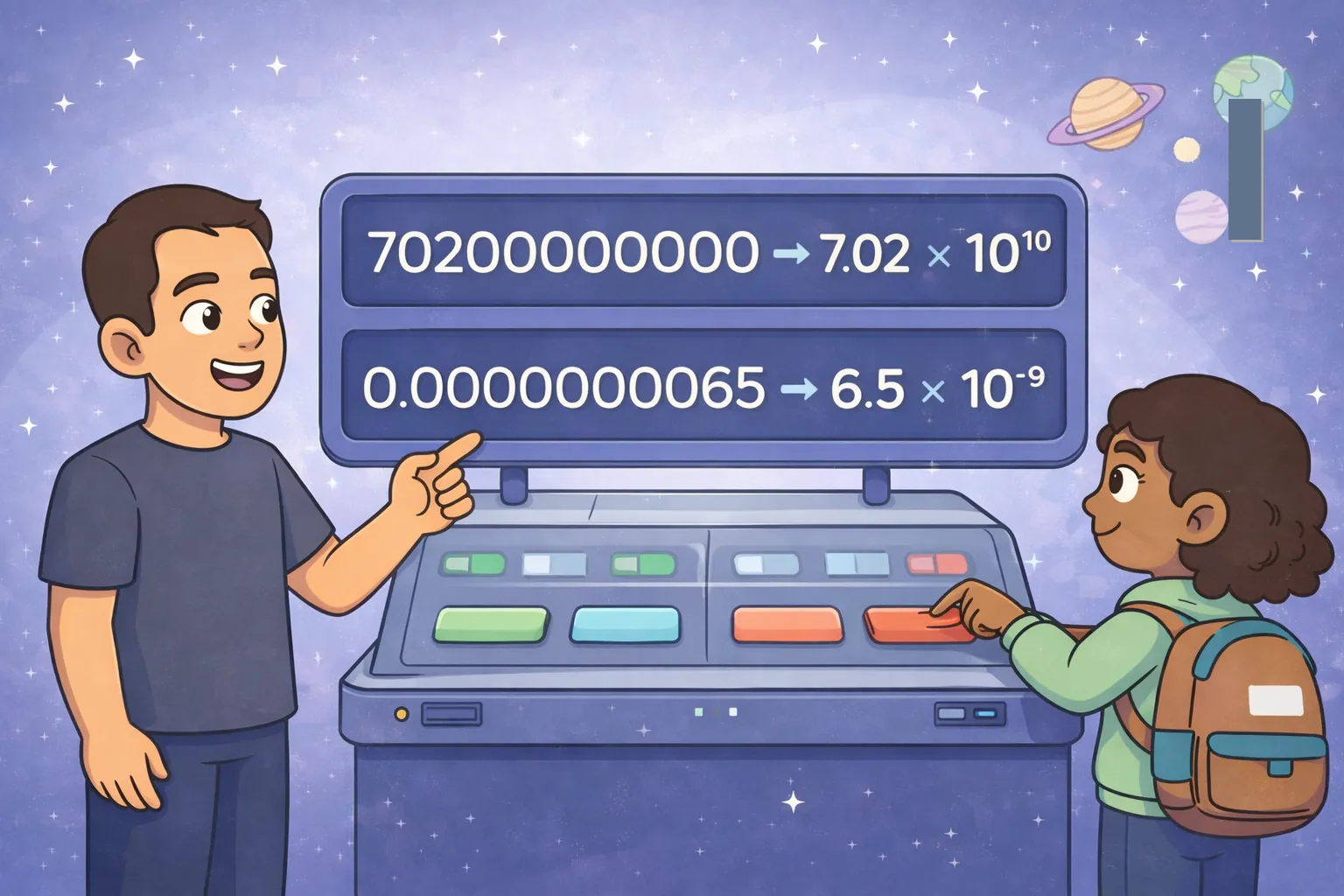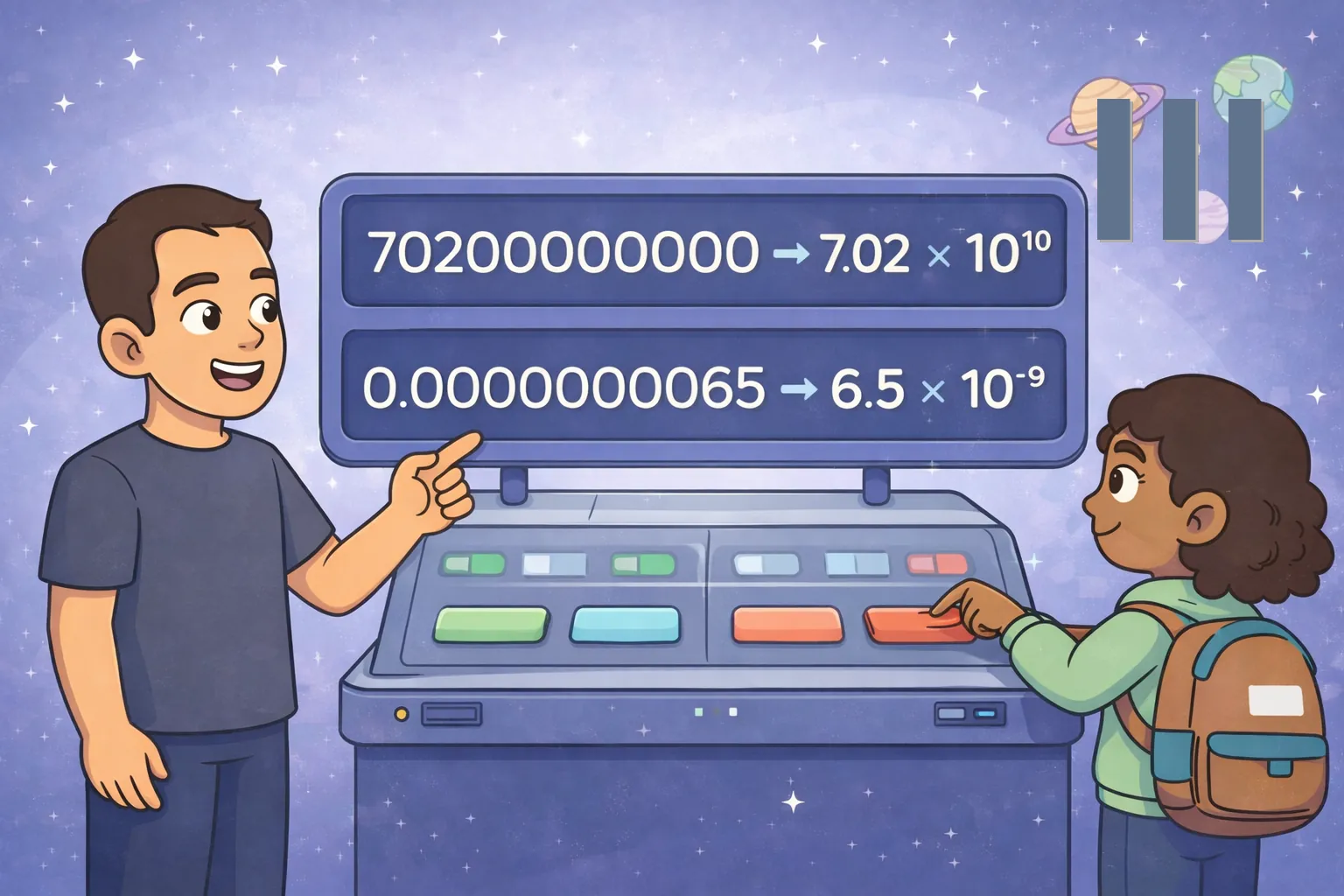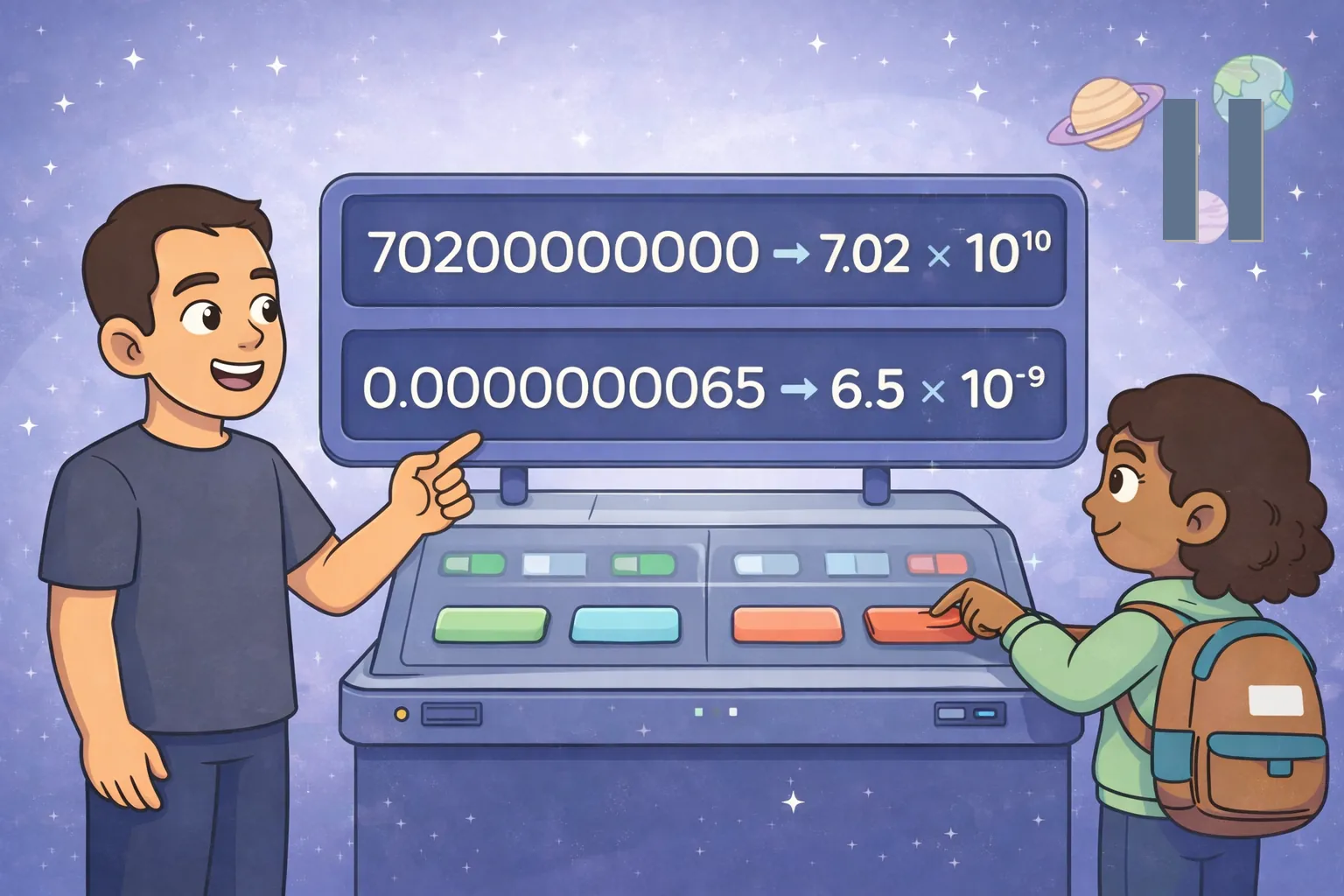
Inside an orbital laboratory, Emek and Luna examined three meteor samples for traces of a valuable element. The scanner measured the concentrations as 0.000064, 0.0000087, and 0.000052 grams per gram for Samples A, B, and C. The sorting system accepted only scientific notation, so Emek rewrote the measurements as 6.4 x 10^-5, 8.7 x 10^-6, and 5.2 x 10^-5. Luna checked the powers of ten and noted that values with 10^-5 were greater than the positive values shown with 10^-6. The collection requirement was a concentration of at least 5.0 x 10^-5 grams per gram. Samples A and C met the requirement, while Sample B did not. To decide which specimen should be studied first, they compared the coefficients of the two qualifying samples. Since 6.4 was greater than 5.2, Sample A had the higher concentration. They placed Samples A and C in the research chamber, with Sample A first in line for detailed analysis.